1

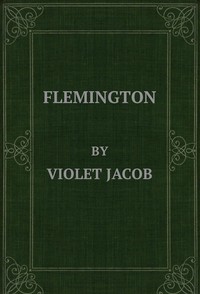
Flemington — Context and Discussion
18
2
Project Gutenberg
2017
Scotland -- History -- 18th century -- Fiction; Jacobite Rebellion, 1745-1746 -- Fiction; Montrose Region (Scotland) -- History -- Fiction
Readers of public-domain and historical texts
Project Gutenberg digital edition
en
Edition facts
Words: 87,599
Reading time: 381 min
Text sections: 30
Source:
Project Gutenberg record #55361
Violet Jacob's 1911 novel follows Archie Flemington, a government agent caught between loyalties during the Jacobite Rebellion of 1745-46. The opening introduces the Angus landscape and Mr. Duthie's unease at Ardguys, while later excerpts show Archie's perilous mission at Montrose, his capture, and his reflection on luck and identity. The author's note clarifies that the ship-taking is historically true but the characters are fictional.
Editorial Edition Score
4.9/5
★★★★★
★★★★★
Calculated from edition completeness, EPUB availability, text structure and catalogue metadata. Not a user rating.
Edition quality
The novel begins not with its protagonist but with Mr. Duthie, a minister walking toward Ardguys, whose discomfort with the remote Angus landscape sets an uneasy tone. The prose lingers on the Kilpie burn, the 'vast ground-swell' of the land, and the house's damp white walls. This opening establishes a world where setting mirrors moral tension—a quality that persists throughout the excerpts.
Violet Jacob's author's note declares the book 'has no claim to be considered an historical novel,' yet the taking of a ship is 'true.' This tension between fiction and fact frames the reader's approach: the story is rooted in real events but driven by invented characters.
Landscape as Moral Terrain
The opening chapter devotes unusual attention to the physical geography of Angus. The narrator describes the 'undulations of pasture' as if a 'vast ground-swell had taken place in the earth, to be arrested, suddenly, in its heaving.' This geological metaphor recurs in the way characters are hidden in 'the trough of these terrestrial waves.' Mr. Duthie, a man of decency, finds the approach to Ardguys 'oppressive'—a word that links his moral discomfort to the landscape's secrecy.
Later, Archie Flemington watches the battle at Montrose from a hillside among whins. The setting again isolates him: he is a 'solitary watcher' above the harbour. The land itself seems to conspire with his predicament, as he must flee across sixty miles of open country. The reader should note how Jacob uses terrain not as backdrop but as an active force in the narrative.
The Unreliable Agent
Archie Flemington is introduced through his actions rather than his appearance. In the Montrose excerpt, he is a Government agent whose identity is about to be exposed by Ferrier and Logie. His internal monologue reveals a man who has trusted his luck for years, only to find 'the jade had turned on him.' He reflects that he has been 'over-confident in her, over-confident in himself.'
Yet the narrator also insists he is 'neither vain nor conceited,' but 'heartily interested in outside things.' This contradiction—between self-awareness and recklessness—defines his character. The reader should watch for how his confidence shifts as the story progresses, especially in scenes where he must navigate between loyalties.
The Battle of Montrose: A Set Piece
The extended description of the naval engagement at Montrose is the most vivid action sequence in the excerpts. The ship appears as 'a gallant, silent, winged creature' against the sea, and the town's cheers rise to where Archie lies on the hillside. The exchange of fire is precise: the Venture sends a shot that falls 'just in front of her bows,' followed by a second that 'cut her rigging.' The broadside echoes 'off the walls of the town till the strait was in a roar.'
Jacob controls the pace by alternating between Archie's perspective and the broader scene. The surrender of the Venture is anticlimactic—'a last roar of shot' and then the flag hauled down. This sequence demonstrates her ability to render military action with clarity while keeping the focus on her protagonist's emotional state.
The Weight of the Past
Archie's thoughts after the battle turn to his home and the 'being he most admired and revered on earth'—likely his mother, though the excerpts do not confirm this. He recalls 'the peaceful background of the home he loved,' now disrupted by 'troublous lights, playing from behind a curtain that hid unknown things.' This language suggests a psychological rupture, as if his past certainties have disintegrated.
The novel's structure, divided into three books with chapter titles like 'The Winter' and 'The Parting of the Ways,' reinforces a sense of irrevocable change. The epilogue's title hints at closure, but the excerpts offer no resolution. Readers should attend to how Jacob weaves Archie's personal history into the larger political crisis.
These excerpts reveal a novel that balances intimate character study with historical action. Jacob's prose is precise and unromantic, even in battle scenes. The reader will benefit from noting how the landscape functions as a character, how Archie's self-awareness complicates his role as an agent, and how the author's note invites a skeptical reading of historical fiction. The incomplete excerpts leave Archie stranded—a fitting state for a protagonist caught between loyalties.
Reader reflection
Take a moment to reflect on this book
Create a short personal record of your experience with this book.
Your progress
0
/
10
2
Was reading this book enjoyable?
3
Would you pass this book on to a friend?
4
What was the reading difficulty like?
5
How would you describe its reading pace?
6
Did anything about the book feel genuinely new?
7
Did this book create an emotional response?
8
How closely did the book connect with your experience?
9
In one sentence, what did you learn?
10