1

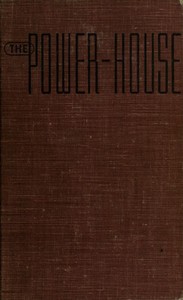
The Power-House — Reading Companion
23
4
Project Gutenberg
2018
Detective and mystery stories; Legal stories; Leithen, Edward (Fictitious character) -- Fiction
Readers of public-domain and historical texts
Project Gutenberg digital edition
en
Edition facts
Words: 36,363
Reading time: 159 min
Text sections: 3
Source:
Project Gutenberg record #57631
John Buchan's 1916 thriller follows lawyer Edward Leithen as he uncovers a global conspiracy from his London chambers, blending legal precision with mounting suspense in a tale of a secret organization called the Power-House.
John Buchan's The Power-House opens not with a crime but with a frame: six men at a duck-shoot, swapping yarns, until the narrator—Leithen, a future Solicitor-General—recounts a past adventure that never took him beyond London. The story's structure is itself a clue to Buchan's method: the wildest exploits are narrated from a smoking-room armchair, and the real action is intellectual and urban. The preface, addressed to General Sir Francis Lloyd, notes the tale was written 'in the smooth days before the war' and offered as a brief escape for soldiers. That context matters: the novel's tension is cerebral, its violence implied, its villainy a matter of whispered names and shadowy networks.
A Narrator Who Stays Put
Leithen is the still centre of a spinning world. While his friends have climbed mountains and crossed deserts, he admits he has 'never been farther from home than Monte Carlo.' Yet his story is one of pursuit and peril. Buchan uses this contrast to define his hero: a man of law and logic, whose weapon is inference, not a rifle. The narrative voice is dry, self-deprecating, and precise—Leithen describes his own terror as 'walking in mysterious darkness'—and this restraint makes the creeping threat of the Power-House more unnerving. He is a detective who rarely leaves his chambers, and the reader sees the conspiracy through his analytical gaze.
The Labour MP as Comic Foil
Leithen's ally, the Labour MP Chapman, provides the story's most vivid comic relief. Buchan sketches him as a man of 'Yorkshire bluntness' who treats the spy hunt as a class struggle—'Tommy and I standing for Labour'—and longs to trade speeches for fisticuffs. Chapman's attempts at surveillance are disastrous: he assaults a butcher's boy, two cabbies, and a bookmaker's assistant, and is arrested after shaking a chauffeur. Leithen must appeal to his 'incurable romanticism' to rein him in. The humour is affectionate but pointed: Chapman's blundering contrasts with Leithen's quiet competence, and his misadventures underscore the danger of mistaking the Power-House for a conventional foe.
The Language of Threat and Indirection
Buchan builds menace through what is not said. The Power-House is never described directly; it is a name dropped in whispers, a network whose reach is felt in 'mysterious darkness.' Leithen's language is legal and measured—he speaks of 'the strife between Capital and Labour' and 'the best kind of strife'—but the ordinary vocabulary becomes charged. A flat in Down Street, a restaurant in Antioch Street, a super-butler: these are the coordinates of a conspiracy that operates in plain sight. The dialogue is clipped, the descriptions spare. Buchan trusts the reader to read between lines, and the effect is a story that feels both modern and timeless in its evocation of hidden power.
A Story of Waiting and Watching
Despite its thriller label, The Power-House is a story of waiting. Leithen spends much of the narrative in his chambers, piecing together clues, while Chapman blunders outside. The action is deferred, the climax approached through inference. Buchan's pacing is deliberate: the first chapter is titled 'Beginning of the Wild-Goose Chase,' and the last 'Return of the Wild Geese,' framing the hunt as a circular, almost absurd pursuit. The real drama is in the accumulation of detail—a name, a glance, a misplaced trust. For readers accustomed to modern thrillers, this restraint may feel slow, but it rewards attention to the texture of Buchan's prose and the quiet authority of his narrator.
Buchan's novel is best read as a puzzle of voice and perspective. The frame narrative—a story told to friends after a day's shooting—reminds us that this is a yarn, not a documentary. Leithen's calm, legal mind is the filter through which we see the Power-House, and his limitations are part of the design. Pay attention to what is omitted: the villains are never fully seen, their plans never spelled out. The terror is in the gaps.
Reader reflection
What was your reading experience?
Capture what you thought, learned, and would like to remember.
Your progress
0
/
10
2
Was reading this book enjoyable?
3
Would you pass this book on to a friend?
4
Did the language feel accessible?
5
Did any part of the book feel personally relevant?
6
Which element worked best for you?
7
How well did it match your expectations?
8
Could you apply anything you learned?
9
What is the main idea you are taking away?
10