1

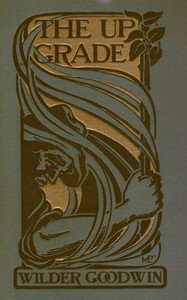
The Up Grade — A Reader’s Guide
30
6
Project Gutenberg
2019
Western stories; Love stories; Arizona -- Fiction; Mines and mineral resources -- Fiction
Readers of public-domain and historical texts
Project Gutenberg digital edition
en
Edition facts
Words: 65,623
Reading time: 286 min
Text sections: 7
Source:
Project Gutenberg record #60010
Wilder Goodwin's 1910 western romance follows Stephen Loring's descent into drunkenness and his reluctant recruitment by the Quentin Mining Company, tracing his moral struggle through recurring images of pawnshops, telegrams, and handwritten notes.
Editorial Edition Score
4.7/5
★★★★★
★★★★★
Calculated from edition completeness, EPUB availability, text structure and catalogue metadata. Not a user rating.
Edition quality
The novel opens with Stephen Loring seated on a Phoenix sidewalk, feet in the gutter, staring vacantly—a man who has 'quit,' as the text puts it. The first chapter establishes a pattern of abrupt transitions: a stranger named McKay recruits him for the Quentin Mining Company, and within pages Loring moves from gutter to train station, then to a mining camp. Goodwin structures the narrative around these swift shifts in setting and fortune, using physical objects—a pawned coat, a borrowed stamp, a crumpled note—to mark Loring's internal state.
The excerpts reveal a story built on contrasts: the gritty realism of a Chinese-American restaurant where a quarter buys a meal, versus the romantic pull of a note signed 'I still believe in you.' The telegram about a Yaqui outbreak in Sonora introduces a sudden geopolitical turn, typical of the novel's movement between personal and frontier crises.
The Pawnshop as Moral Barometer
Goodwin repeatedly uses pawnshops and small transactions to measure Loring's descent and tentative recovery. In the opening, Loring pawns his coat for 'two bits'—a quarter—to buy a meal. The proprietor's prodding of the cloth and shaking his head over the worn lining mirrors how other characters assess Loring himself. Later, when Loring borrows two cents for a stamp, a stranger laughs and offers a meal, but Loring refuses, insisting he still has his coat to pawn. These scenes create a tactile economy of shame and pride.
The pawnbroker's shop is described with a telling detail: 'The brightness of the gilding upon the three balls showed that it was a successful one.' The gilding contrasts with the shabby goods inside, much as Loring's outward appearance belies his inner resolve. The recurring act of pawning—and the precise sums involved—grounds the story in a material world where every coin carries weight.
Letters, Notes, and the Weight of Words
Handwritten messages drive key decisions in the excerpts. Loring receives a letter from Mr. Cameron offering a job, which he initially considers accepting, calling it 'another chance.' But a second envelope—Jean's note with the line 'I still believe in you'—prompts a reversal. He tears open the note, reads it repeatedly, and then writes a five-word refusal to Cameron: 'I'm damned if I will.' The physical act of stamping the envelope 'with a hard pound of his fist' underscores his emotional pivot.
Goodwin contrasts the impersonal telegram from the governor of Sonora—posted in a window, read by a crowd—with Jean's private note that Loring keeps 'warm against his heart.' The novel thus sets public communication (telegrams, posted notices) against intimate correspondence, each triggering different kinds of action. The telegram about the Yaqui outbreak, for instance, spurs a crowd to cheer and volunteer, while Jean's note steers Loring toward a solitary moral stand.
Movement Between Public and Private Spaces
The excerpts shuttle between crowded public venues—sidewalks, post-offices, pawnshops, restaurants—and moments of isolated reflection. Loring first appears on a sidewalk, oblivious to his surroundings; later, he reads Jean's note in a post-office, 'with bowed head,' his shoulders shaking. The post-office recurs as a threshold: it is where he mails his defiant reply, where he reads the posted telegram, and where he borrows a stamp from a stranger. These public spaces force encounters that propel the plot.
In contrast, the pawnshop and the Chinese-American restaurant are liminal zones—neither fully public nor private—where Loring negotiates his survival. The restaurant's sign promises 'All you can eat for two bits,' but Loring reflects that 'any man who ate more than a quarter's worth would die.' Such wry observations punctuate the narrative, grounding its emotional highs in physical need. The movement from sidewalk to station to mining camp to post-office creates a rhythm of dislocation and provisional belonging.
Recurring Images of Hands and Gestures
Goodwin emphasizes hands and physical gestures as markers of character and emotion. McKay 'slipping his arm through Loring's' signals a forceful camaraderie. Loring 'unconsciously stretched out his hand, as if to press in gratitude and devotion the hand of some one before him' while reading Jean's note—a gesture that reaches toward an absent person. Later, he 'thrust the letter into his pocket' and 'slid his hand out of his coat pocket' to find the second envelope, each motion carrying narrative weight.
The pawnbroker 'picked up' the coat, 'prodded the cloth with his thumb-nail'—a tactile assessment that reduces Loring's worth to a quarter. When Loring 'nonchalantly slid his quarter across the counter' at the restaurant, the casualness masks desperation. These hand-centered actions—reaching, prodding, sliding, pounding—form a silent vocabulary of need and resolve, often more telling than dialogue.
Readers attentive to Goodwin's use of objects—pawn tickets, stamped envelopes, telegrams—will find a narrative that measures character through material transactions. The novel's structure, moving from gutter to mining camp to post-office, mirrors Loring's erratic moral trajectory. The excerpts suggest that the full story may hinge on whether Loring can sustain the resolve signaled by his five-word refusal, and whether Jean's belief proves warranted. The Yaqui outbreak introduces a collective crisis that may test individual loyalties.
Reader reflection
What did you think of this book?
Answer a few questions and save a private reflection on this device.
Your progress
0
/
10
2
Did this book hold your interest?
3
How likely are you to recommend this book?
4
How easy was the book to follow?
5
How closely did the book connect with your experience?
6
Did you gain anything practical from the text?
7
Could you follow the author’s main argument?
8
How distinctive were its ideas or approach?
9
What did this book teach you most?
10