1


The Red Bicycle — Inside the Classic
23
6
Project Gutenberg
2017
Detective and mystery stories; England -- Fiction; Murder -- Investigation -- Fiction
Readers of public-domain and historical texts
Project Gutenberg digital edition
en
Edition facts
Words: 65,122
Reading time: 284 min
Text sections: 8
Source:
Project Gutenberg record #55748
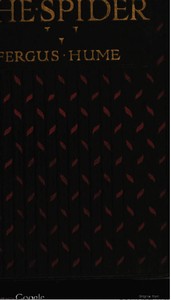
Fergus Hume's serialized mystery follows a red bicycle as a clue in a murder case, with suspicion falling on a buccaneer-like suitor and a jealous widow. The opening introduces a superstitious washerwoman and a house named Maranatha, setting a tone of domestic suspicion.
Editorial Edition Score
4.7/5
★★★★★
★★★★★
Calculated from edition completeness, EPUB availability, text structure and catalogue metadata. Not a user rating.
Edition quality
The novel opens not with a crime but with a washerwoman's cart taking an unusually roundabout route through a November fog. Mrs. Mellin, peering for a particular sight, stops at a dreary mansion called Maranatha—a biblical term she finds unsettling. Her son, a choir-boy, explains it means cursing, but she forbids him from using the word. This small domestic scene, rich with dialect and superstition, establishes the story's grounding in everyday life even as it hints at darker undercurrents. The house's name and the mother's shivers foreshadow the murder to come, while the white donkey Nelly's stubbornness and the damp, misty setting create a palpable atmosphere of reluctance and unease.
A House Named Maranatha
The name Maranatha, meaning 'the Lord comes' or a curse, is the first clue that this is no ordinary English village. Mrs. Mellin's reaction—'it gives me the shivers'—is shared by the reader, as the house itself is described as 'square, ugly,' with damp red bricks almost hidden by dark curtains. The serialized origin in a New Zealand newspaper (1915) may explain the leisurely pace: the opening chapter builds atmosphere before any crime occurs. The washerwoman's curiosity about the 'new gent' who has moved in suggests that the house and its occupant will be central to the mystery. Readers should note how Hume uses ordinary details—a cart, a donkey, a foggy afternoon—to introduce the story's key location and its ominous name.
Dialect and Domestic Suspicion
Mrs. Mellin's speech is thick with dialect: ''ear,' 'sich,' 'ma,' ''Ouse.' This grounds the narrative in a specific social milieu, where the washerwoman's perspective offers a ground-level view of events. Her suspicion of Maranatha and its new resident is not based on evidence but on superstition and hearsay—a motif that recurs as the mystery unfolds. Later excerpts show Claudia Lemby expressing similar distrust of Lady Wyke, calling her 'a cat' and 'a persistent, spiteful cat.' Both women rely on intuition and jealousy rather than facts, creating a pattern of suspicion that the detective must navigate. Hume uses these voices to show how gossip and emotion can cloud judgment, a theme that may prove central to the resolution.
The Bicycle as a Silent Witness
The title object, the red bicycle, appears only obliquely in the excerpts. In the middle passage, Edwin Craver mentions 'the other fellow who bolted on the bicycle,' linking the vehicle to the murderer's escape. The bicycle is thus established as a key piece of evidence, but its color and ownership remain unexplored in the provided text. Readers should watch for how the bicycle is described when it appears—its condition, location, and any marks that might identify its rider. Hume, author of 'The Mystery of a Hansom Cab,' knows how to use a vehicle as a plot device. The bicycle's redness may be a deliberate clue, drawing attention in a foggy, monochrome setting. Its absence from the opening suggests it will be introduced later, perhaps as a surprising link between characters.
Jealousy and Motive in a Love Triangle
The later excerpt reveals a romantic entanglement: Claudia Lemby is engaged to Edwin Craver, but Lady Wyke, an older, wealthy widow, pursues him persistently. Claudia's jealousy is palpable—she fears Lady Wyke will kiss Edwin or manipulate her father, who wants to marry Lady Wyke for her money. This love triangle intertwines with the murder investigation, as Lady Wyke may be using hints about Claudia's father to pressure Edwin. Hume presents these relationships through dialogue, with Claudia's outbursts ('Oh, what a cat she is!') contrasting with Edwin's calm reason. The reader must weigh each character's reliability: Claudia is emotional, Edwin is evasive, and Lady Wyke is absent from the scene. Their conflicting interests suggest multiple possible motives for the murder of Sir Hector Wyke.
As you read, pay attention to how Hume balances the detective plot with social observation. The red bicycle is both a literal clue and a symbol of mobility and escape in a world where characters are trapped by class, gender, and suspicion. The serial format means each chapter may end on a revelation or a question; note how the excerpts build tension through conversation rather than action. The novel rewards careful attention to names, objects, and the gaps between what characters say and what they know.
Reader reflection
How will you remember this book?
Save your reaction, strongest insight, and memorable passage.
Your progress
0
/
10
2
How did the book work for you overall?
3
Is this a title you would suggest to others?
4
How much effort did this book require?
5
How did the pace of the book feel?
6
Could you follow the author’s main argument?
7
Did the book offer a fresh perspective?
8
Would you like to discuss this book with someone?
9
In one sentence, what did you learn?
10