1

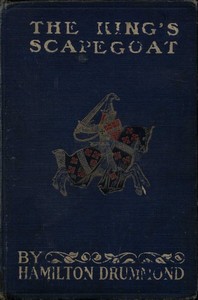
The King's Scapegoat — A Reader’s Guide
21
3
Project Gutenberg
2018
France -- History -- Louis XI, 1461-1483 -- Fiction; Paris (France) -- Fiction; Adventure stories
Readers of public-domain and historical texts
Project Gutenberg digital edition
en
Edition facts
Words: 89,106
Reading time: 388 min
Text sections: 8
Source:
Project Gutenberg record #57401
A first-person narrative from Gaspard Hellewyl, a simple gentleman turned King's envoy, recounting his involvement in Louis XI's political schemes. The voice shifts between self-deprecating humility and defensive pride, while the pace varies from tense dialogue to reflective commentary on memory and honor.
Editorial Edition Score
4.8/5
★★★★★
★★★★★
Calculated from edition completeness, EPUB availability, text structure and catalogue metadata. Not a user rating.
Edition quality
The narrator of The King's Scapegoat introduces himself with a striking claim: fate did not lead him to court favour but kicked him there. This blunt, self-deprecating voice—calling his rise 'a vicious cuff of misfortune's contempt'—sets the tone for a memoir that is as much about vindication as adventure. Gaspard Hellewyl writes to correct those who have called him coward and traitor, insisting he acted with honour in a scheme he judged 'a not unreasonable solution' to a political crisis. The prose is deliberate, often pausing to justify past choices, yet it also quickens into sharp exchanges, as when a woman cries 'Wait! wait!' and he counters with 'the best fruit ripens slowly.' This tension between reflection and urgency shapes the narrative's rhythm.
A Voice That Defends and Digresses
The narrator's tone is consistently defensive, even before any accusation appears. In the opening chapter, he insists his story is necessary 'for truth's sake' and later declares he has fought three times to maintain his opinion. This combative humility—calling himself 'a simple-hearted gentleman' while challenging historians like Philip de Commines—creates a voice that is both self-effacing and proud. He frequently interrupts the action to address the reader directly, as when he asks 'Judge, too, if Gaspard Hellewyl was the man to root his fortunes in his own dishonour?' These asides slow the pace, turning the narrative into a courtroom where the speaker presents evidence. The effect is a layered confession: we hear not only what happened but how the narrator wishes to be remembered.
Pace Shifts Between Action and Reflection
The excerpts show two distinct speeds. In dialogue, the pace quickens: a woman's 'pleading cry' and the boy Gaston's interruption create a scene of immediate tension. The narrator's replies are terse—'Heart, head, and hand'—and the exchange moves rapidly through gestures and withheld information. Yet these bursts are framed by longer, meditative passages where the narrator weighs motives and consequences. For instance, he pauses to explain why he could not give the letter, saying 'the best fruit ripens slowly,' a proverb that slows the moment. This alternation between crisis and commentary gives the story a breathless yet deliberate quality, as if the narrator is reliving events while simultaneously editing them for posterity.
Recurring Details of Secrecy and Trust
Several motifs recur across the excerpts: letters, seals, and the act of waiting. The King's letter is produced with a 'false seal' and an 'extorted endorsement,' objects that carry both power and deception. The woman's repeated cry of 'Wait!' becomes a refrain, contrasting with the narrator's insistence on patience. These details build a world where trust is fragile and communication is fraught with hidden meanings. The narrator's claim that he came 'with full knowledge' of Commines is immediately undercut by the letter's lack of address. Such contradictions—between what is said and what is shown—create a texture of suspicion. The reader, like the characters, must judge whom to believe.
Readers should attend to the narrator's shifting justifications: he is both a victim of fate and an agent of his own story. The gaps between his self-image and the events he describes invite scrutiny. Pay particular attention to how he handles moments of silence or withheld information—these are where the narrative's true tensions lie.
Reader reflection
Take a moment to reflect on this book
Create a short personal record of your experience with this book.
Your progress
0
/
10
2
What was your overall reaction to the book?
3
Would you recommend this book to another reader?
4
How demanding did the text feel?
5
Did the book deliver what you hoped for?
6
How would you rate its originality?
7
How strong was your personal connection to the text?
8
Which part made the strongest impression?
9
What did this book teach you most?
10