1

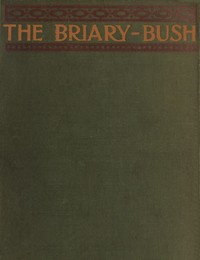
The Briary Bush: A Novel — Background and Themes
4
2
Project Gutenberg
2019
Chicago (Ill.) -- Fiction; Marriage -- Fiction; Journalists -- Fiction; American fiction -- 20th century
Readers of public-domain and historical texts
Project Gutenberg digital edition
en
Edition facts
Words: 132,635
Reading time: 577 min
Text sections: 66
Source:
Project Gutenberg record #58622
Floyd Dell's 1921 novel follows journalist Felix Fay and his wife Rose-Ann through early 20th-century Chicago, tracing tensions between artistic ambition and domestic life. The narrative moves from a communal house to various city addresses, using precise settings and dialogue to explore marriage, work, and the struggle between being an artist and a 'human being.'
Editorial Edition Score
4.9/5
★★★★★
★★★★★
Calculated from edition completeness, EPUB availability, text structure and catalogue metadata. Not a user rating.
Edition quality
Floyd Dell's The Briary Bush opens with Felix Fay at a desk in the Port Royal Daily Record office, writing headings for country correspondents' items: a new barn, a ten-pound boy, a return to normal school. The novel's first chapter, titled 'Felix Decides to Change His Character,' immediately signals a central preoccupation with self-transformation. The epigraph from an old song—'Oh, the briary-bush / That pricks my heart so sore!'—frames the story as one of entrapment and the desire for escape, a motif that recurs in the characters' negotiations between artistic integrity and conventional success.
The Artist vs. the Human Being
A key tension emerges in a dialogue between Felix and Rose-Ann. Felix declares, 'There are two kinds of people in the world—artists and human beings. I've never been a human being; so I must have been an artist. And I don't want to be any longer!' Rose-Ann, 'frightened at this heresy,' recoils. The exchange reveals a central conflict: Felix's desire to 'be a human being' is framed as a betrayal of his artistic identity. Rose-Ann insists he must 'do what you want to do; not what you think I want you to do,' yet Felix suspects she secretly wants him to succeed in conventional terms. The novel uses this dialogue to dramatize the couple's struggle over the meaning of vocation and marriage, without resolving which path is authentic.
Chicago as a Stage for Ambition
The novel's structure is organized around specific Chicago addresses—Community House, Canal Street, Woods Point, Fifty-Seventh Street, Garfield Boulevard, Wilson Avenue—each marking a phase in Felix and Rose-Ann's life. The city is not merely a backdrop but a force that shapes their possibilities. In the excerpt from chapter XXXI, Felix, now assistant dramatic editor, learns he must fill a column with 'interviews—clip-stuff from the London weeklies of last winter—anything to keep going' while his editor is away. The passage underscores the improvisational nature of his work and the gap between artistic aspiration and the grind of journalism. The city's theatrical season provides material for his criticism, but also mirrors the performative aspects of his own life.
Marriage as a Negotiation of Roles
Throughout the excerpts, marriage is depicted as a series of negotiations over identity and expectation. Rose-Ann fears she has 'done things' to Felix unintentionally, and resolves to 'let you alone.' Felix, in turn, interprets her fears through the lens of novels 'in which the young wife subtly corrupts her artist husband into prosperous mediocrity.' He decides to take responsibility for his own transformation, becoming 'what, in her secret heart, and in spite of all her protestations, she really wanted him to be.' The narrative thus presents marriage as a theater of unspoken desires and reciprocal influence, where each partner projects onto the other a version of what they should become.
Readers attentive to the novel's recurring motifs—the map of Chicago's iron roads, the 'briary-bush' of the epigraph, the contrast between artistic and domestic spaces—will find a work that resists easy categorization. Dell's prose moves between sharp dialogue and reflective interiority, inviting scrutiny of how characters perform their roles. The incomplete excerpts leave open whether Felix's decision to 'change his character' leads to fulfillment or regret, making the novel a sustained meditation on the costs of self-invention.
Reader reflection
How did this book work for you?
Your answers remain private and are stored only in this browser.
Your progress
0
/
10
2
How much did you enjoy the reading experience?
3
Would you encourage someone else to read it?
4
How easy was the book to follow?
5
Could you apply anything you learned?
6
Did anything about the book feel genuinely new?
7
How strong was your personal connection to the text?
8
What was its emotional impact?
9
What did this book teach you most?
10