1

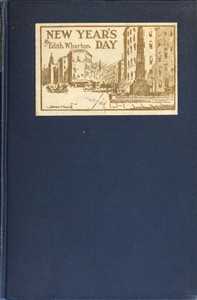
New Year's Day (The 'Seventies) — Inside the Classic
34
6
Project Gutenberg
2020
New York (N.Y.) -- Social life and customs -- Fiction; Married women -- Fiction; Widows -- Fiction; Man-woman relationships -- Fiction
Readers of public-domain and historical texts
Project Gutenberg digital edition
en
Edition facts
Words: 25,051
Reading time: 109 min
Text sections: 3
Source:
Project Gutenberg record #61321
Edith Wharton's novella opens with a mother's hissed gossip about a couple meeting at the Fifth Avenue Hotel, using that precise address to expose social codes of 1870s New York. The narrative examines marriage, illness, and reputation through the Hazeldeans, contrasting private anguish with public judgment.
Editorial Edition Score
4.5/5
★★★★★
★★★★★
Calculated from edition completeness, EPUB availability, text structure and catalogue metadata. Not a user rating.
Edition quality
The story begins not with a scene but with a phrase: “They used to meet at the Fifth Avenue Hotel.” That sentence, dropped by the narrator’s mother while knitting a baby-blanket, carries the weight of old New York’s moral geography. The hotel is not just a location but a measure of transgression—the specificity of the address matters as much as the act itself. Wharton immediately establishes a world where gossip is a form of social control, and where a woman’s reputation can be undone by a single meeting place.
The narrator, looking back from a later era, notes how attitudes have shifted: “Life has become too telegraphic for curiosity to linger.” This framing device—a man recalling his boyhood—allows Wharton to contrast the rigid codes of the 1870s with the more casual morals of the 1920s, when the novella was published. The opening thus sets up a tension between past and present, private feeling and public performance.
Gossip as a Narrative Engine
The mother’s hissing delivery—“as if the scene of the offence added to the guilt”—reveals how place amplifies scandal in this social world. The Fifth Avenue Hotel is not merely a backdrop; it is a character in the moral drama. The narrator’s mother is “always employed in benevolent actions while she uttered uncharitable words,” a detail that encapsulates the hypocrisy Wharton dissects. The gossip is passed along with the precision of a legal deposition, and the narrator admits that the phrase “focussed on an unremitted incident of my boyhood.”
Wharton uses this gossip to introduce the central couple, Lizzie Hazeldean and Henry Prest, but the reader never gets a direct account of their affair. Instead, the story is filtered through the lens of public opinion and family memory. The narrator’s mother and old Sillerton Jackson represent a generation that still cares about “such topographies,” while the narrator himself stands at a distance, curious but detached. This layered narration means that the affair is always mediated by judgment, never fully known.
The Weight of Illness and Economy
Charles Hazeldean’s heart condition is described with a blend of medical detail and social comedy: the “Hazeldean heart” was a “proverbial boast,” more distinguished than the Sillerton gout. But the illness is no joke for Lizzie. As Charles’s health declines, his income dwindles, and he frets about depriving her of luxuries. Wharton shows how economic dependence intertwines with love: Charles “had gloried too much in her prettiness, her elegance, her easy way of wearing her expensive dresses.”
Lizzie, for her part, is “indifferent” to luxury but cannot convince him. The tension between her actual desires and his assumptions about her needs drives the plot. Mrs. Mant’s charity—Baltimore terrapin, clam broth, old port—becomes a weapon, a way of saying “I told you so.” Charles’s pride is wounded by being “pauperized” by his mother-in-law, and Lizzie must navigate between his dignity and her own survival. The novella suggests that in this world, love is never free from financial calculation.
A Marriage Tested by Silence
The most intense scene in the excerpts occurs when Charles returns home unexpectedly and finds Lizzie in a moment of private memory. She is “smiling faintly” at a past exchange with Mrs. Mant when the door-handle turns. His expression frightens her; for an instant she sees him “as if he had been an enemy.” But his look is not anger—it is “the remote lost look of excessive physical pain.”
Wharton builds the scene around what is not said. Charles cannot speak at first, and Lizzie wonders if he has discovered her secret. When he finally asks, “Love, love—you’ve been happy?” the word “happy” chokes her. She clings to him, and he gives her “one full look; all their life together was in it.” The moment passes, and she turns to remedies and servants. The novella leaves the reader to infer what Charles knows or suspects, focusing instead on the performance of care. The marriage survives not through confession but through a shared fiction of contentment.
Wharton’s novella is less about the affair itself than about the social and emotional architecture that surrounds it. Readers should attend to the way the narrator’s retrospective voice filters every event, and to the small, telling details—the hiss of a mother’s voice, the weight of a shawl, the taste of terrapin—that carry the story’s moral weight. The excerpts offer a portrait of a marriage under pressure, but the full shape of Lizzie’s choices remains tantalizingly incomplete.
Reader reflection
How did this book work for you?
Your answers remain private and are stored only in this browser.
Your progress
0
/
10
2
Was reading this book enjoyable?
3
Is this a title you would suggest to others?
4
How demanding did the text feel?
5
Did you relate to its people, ideas, or situations?
6
How useful were the ideas in this book?
7
Did the book deliver what you hoped for?
8
Would a second reading be valuable?
9
What did this book teach you most?
10