
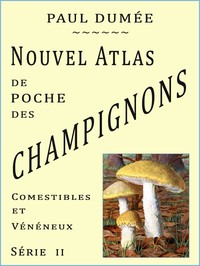
Nouvel atlas de poche des champignons Comestibles et Vénéneux les plus…
This isn't a novel, but its story is written in plates and descriptions. Published in the late 19th century, Paul Dumée's 'Nouvel atlas de poche' is a field guide for the ages. It was created for a practical, urgent purpose: to help everyday people—foragers, farmers, families—safely navigate the woods. In an era without photography or instant identification apps, a mistake could be fatal. Dumée compiled detailed descriptions and, most importantly, stunning hand-colored lithograph illustrations of dozens of mushrooms, clearly labeling them as edible or poisonous. The 'plot' is the silent drama on every page: the beautiful, deadly look-alikes placed side-by-side, the careful notes on habitat and season, all serving as a shield against a quiet, natural danger.
Why You Should Read It
First, the art. The illustrations are reason enough. They are scientific yet possess a strange beauty, a snapshot of botanical art from another time. But more than that, this book connects you to a fundamental human experience. Holding it, you feel the weight of that old, serious question: 'Is this safe to eat?' It makes you appreciate the knowledge we take for granted today. You get a real sense of Dumée's mission—it feels less like a dry academic text and more like a concerned expert trying to get vital information into as many hands as possible. It's a powerful reminder of how we've always tried to understand and coexist with the natural world, often with our dinner plates on the line.
Final Verdict
This is a niche gem, but its appeal is broad. It's perfect for history buffs, foraging enthusiasts, and anyone who loves beautiful old books. If you enjoy natural history, botanical art, or just holding a tangible piece of the past, you'll be captivated. It's not a modern field guide you'd take on a hike (please use a current one for that!), but as a historical artifact and a work of art, it's utterly absorbing. Think of it as a conversation starter for your coffee table that comes with a side of mild peril.
This publication is available for unrestricted use. You can copy, modify, and distribute it freely.
Charles Wilson
6 months agoI've been looking for a reliable source on this topic, and the footnotes provide extra depth for those who want to dig deeper. An excellent example of how quality digital books should be formatted.
Elizabeth Smith
2 months agoI was skeptical about the depth of this book at first, but the author clearly has a deep mastery of the subject matter. An excellent example of how quality digital books should be formatted.
Sarah Jones
5 months agoI found the data interpretation to be highly professional and unbiased.
Patricia Garcia
2 years agoGreat digital experience compared to other versions.

Robert Rodriguez
11 months agoRight from the opening paragraph, the way it handles controversial points with balance is quite professional. An excellent example of how quality digital books should be formatted.