
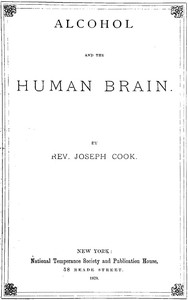
Alcohol and the Human Brain by Joseph Cook
Let's set the scene. In the late 1800s, many people, including some doctors, believed alcohol was a stimulant—something that could give you strength and even act as medicine. Joseph Cook, a powerful public speaker and staunch temperance advocate, wrote this book to dismantle that idea piece by piece.
The Story
There's no traditional plot here with characters. Instead, Cook builds a case. He walks you through the chemistry of fermentation, showing how alcohol is created by a process of decay. He then presents the anatomy of the brain and nervous system, explaining in clear terms how alcohol, as a solvent and irritant, acts upon it. His main point is that alcohol is a depressant, not a stimulant. It numbs the brain's highest functions first—judgment and self-control—which is why people might feel stimulated. He argues that every drink causes damage, hardening tissues, killing cells, and leading to a slow decline. The 'story' is the relentless march of his evidence against the common defenses of drinking culture.
Why You Should Read It
This book is a time capsule of a huge cultural battle. What grabbed me wasn't just the science (which is presented with the certainty of its era), but the sheer passion of the argument. You can feel Cook's urgency. He's not just presenting data; he's trying to save souls and society from what he sees as a clear and present danger. Reading his descriptions of brain tissue 'saturated' with alcohol is intense. It makes you realize how much the baseline assumptions about health and vice have shifted. While some of his absolute claims feel dated, the core question—how does this chemical actually affect our biology?—is incredibly modern.
Final Verdict
This is a perfect read for anyone interested in the history of medicine, the temperance movement, or the long-running clash between science and social habits. It's not a balanced, modern overview of alcohol's effects; it's a prosecuting attorney's closing argument. If you enjoy primary sources that let you inside the mind of a historical moment, you'll find this captivating. Be ready for a one-sided, fiery, and scientifically earnest manifesto that shows just how high the stakes felt over 140 years ago.
This text is dedicated to the public domain. Feel free to use it for personal or commercial purposes.
Elizabeth Davis
11 months agoThis was exactly the kind of deep dive I was searching for, the evidence-based approach makes it a very credible source of information. This has become my go-to guide for this specific topic.


Elizabeth Lee
2 years agoHaving explored several resources on this, I find that the evidence-based approach makes it a very credible source of information. This is a solid reference for both beginners and experts.