
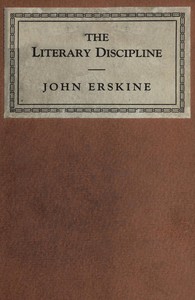
The Literary Discipline by John Erskine
Don't let the formal title fool you. The Literary Discipline isn't a dry textbook. It's a professor's passionate argument about how we've gotten reading all wrong.
The Story
There's no plot or characters in the traditional sense. Think of it as Erskine laying out his case, like a lawyer before a jury of readers. He starts by observing the state of literary education in the early 20th century. He sees students and critics focusing too much on historical context, author biography, and technical form—everything around the book—while missing the book's core purpose. Erskine's central idea is simple: the primary reason to read great literature is to engage with the ethical and philosophical questions the author presents. He believes books like Paradise Lost or the works of Shakespeare are fundamentally concerned with human choices, virtues, vices, and consequences. His 'discipline' is the mental habit of reading to uncover this wisdom, to have a conversation with the great minds of the past about how to live. The book is his method for recentering that conversation.
Why You Should Read It
What's amazing is how fresh this 100-year-old book feels. Reading it, I kept nodding along. Erskine was fighting against an academic trend that valued obscure analysis over human insight. Today, we might call it 'over-intellectualizing' or letting jargon get in the way. His voice is clear, confident, and sometimes wonderfully blunt. He isn't against scholarship, but he insists it must serve the larger goal of understanding life. This book gave me permission to trust my own reactions to a story again. It reinforced that asking 'What is this book trying to say about being human?' is not a naive question—it's the most important one. It's a rallying cry for readers who believe stories matter because they shape who we are.
Final Verdict
This is a perfect little book for thoughtful readers, book club members, or anyone who teaches literature and wants to reconnect with its foundational power. It's especially valuable if you feel alienated by overly theoretical or politicized literary criticism. Erskine brings the discussion back to the reader's heart and mind. It's not a long read, but it's a dense and rewarding one. You'll likely find yourself arguing with him at points, but that's part of the fun. Ultimately, The Literary Discipline is for anyone who believes that a great book isn't just something to be studied, but something to be lived with.
This publication is available for unrestricted use. You do not need permission to reproduce this work.
Karen Harris
10 months agoThis is an essential addition to any academic digital library.
Susan Gonzalez
6 months agoUnlike many other resources I've purchased before, it addresses the common misconceptions in a very professional manner. I appreciate the effort that went into this curation.
Richard Jones
8 months agoI appreciate the objective tone and the evidence-based approach.
Michael Perez
11 months agoThe clarity of the introduction set high expectations, and the clarity of the writing makes even the most dense sections readable. It definitely lives up to the reputation of the publisher.







Michael White
1 year agoI took detailed notes while reading through the chapters and the data points used to support the main thesis are quite robust. Simple, effective, and authoritative – what else could you ask for?