
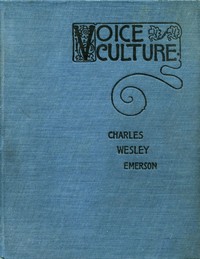
Psycho Vox; or, The Emerson System of Voice Culture by Charles Wesley Emerson
So, what exactly is this book about? It’s not a story with characters and a plot in the traditional sense. Instead, ‘Psycho Vox’ is a training manual and philosophical argument built around a single, powerful idea: your voice and your character are inseparable.
The Story
Charles Wesley Emerson, a teacher of oratory in the late 19th century, lays out his complete system for developing the voice. He argues that you can’t just train the throat and lips. A good voice—clear, resonant, and expressive—comes from a whole person who is physically healthy, emotionally balanced, and intellectually alert. The book walks you through exercises for breathing, posture, and articulation, but it constantly ties these back to mental and moral qualities. For Emerson, a shrill voice indicates irritability. A weak voice suggests low vitality or a lack of conviction. To improve your voice, you must improve yourself: think noble thoughts, cultivate calm, and breathe from your diaphragm, not your chest. The ‘plot’ is the reader’s own journey from a constrained, unnatural way of speaking to a free and authentic one.
Why You Should Read It
I picked this up expecting a dusty old speech textbook, but I was genuinely surprised. The insight that stuck with me is how much we still judge people—and are judged—by their voices. Emerson takes that observation and runs with it, giving it a full philosophical and practical framework. Reading his passionate arguments about honesty in tone and power in breath feels oddly modern. It’s a reminder that in our world of texting and digital avatars, the human voice carries a raw, immediate power. The exercises are a fascinating historical artifact (some feel very yoga-like!), and his belief in self-cultivation is pure, old-school American optimism. It made me hyper-aware of my own voice for days.
Final Verdict
This book is a niche gem, but a brilliant one for the right reader. It’s perfect for history buffs interested in 19th-century thought, actors or singers curious about vintage techniques, or anyone in the self-help sphere who wants to see the roots of the mind-body connection. If you’re looking for a fast-paced novel, look elsewhere. But if you want a thoughtful, unusual, and surprisingly deep dive into a skill we all use but rarely think about, ‘Psycho Vox’ is a captivating time capsule. Just be prepared to sit up straight and take a deep breath while you read.
There are no legal restrictions on this material. You are welcome to share this with anyone.
Kimberly Hernandez
5 months agoIt’s rare to find such a well-structured narrative nowadays, the visual layout and supporting data make the reading experience very smooth. I’ll definitely be revisiting some of these chapters again soon.
William Wilson
11 months agoAs a long-time follower of this subject matter, the visual layout and supporting data make the reading experience very smooth. It’s a comprehensive resource that doesn't feel bloated.
Michael Taylor
11 months agoI stumbled upon this title during my weekend research and the level of detail in the second half of the book is truly impressive. A rare gem in a sea of mediocre content.
Sandra Nguyen
1 year agoI had low expectations initially, however the depth of research presented here is truly commendable. Absolutely essential reading.









Jessica Garcia
1 year agoThe methodology used in this work is academically sound.